SMT Assembly

Advanced SMT PCB Assembly Solutions for Complex Electronics

JinTeng (SMT) is the backbone of modern electronics manufacturing, enabling compact, high-performance reliability across industries. At JinTeng, our SMT assembly services are designed to meet the demands of advanced applications where precision, throughput, and repeatability are critical.

PCBA manufacturing facilities are equipped with state-of-the-art SMT assembly lines and offer complete solutions from rapid prototyping and New Product Introduction (NPI) to high-mix, high-volume production. Each line features advanced pick and place systems, inline optical inspection, reflow ovens, and comprehensive traceability to ensure consistent quality in every build. Our deep process expertise, strict quality standards, and IPC‑certified workmanship are strengthened by ongoing SMT assembly process optimization and quality control, giving customers confidence that every build meets the tightest tolerances and demanding industry requirements.

Whether you are developing mission-critical aerospace electronics or next-generation medical devices, Foxtronics EMS delivers scalable SMT PCB assembly solutions that support your product goals, compliance needs, and time to market objectives.
What is SMT Assembly?

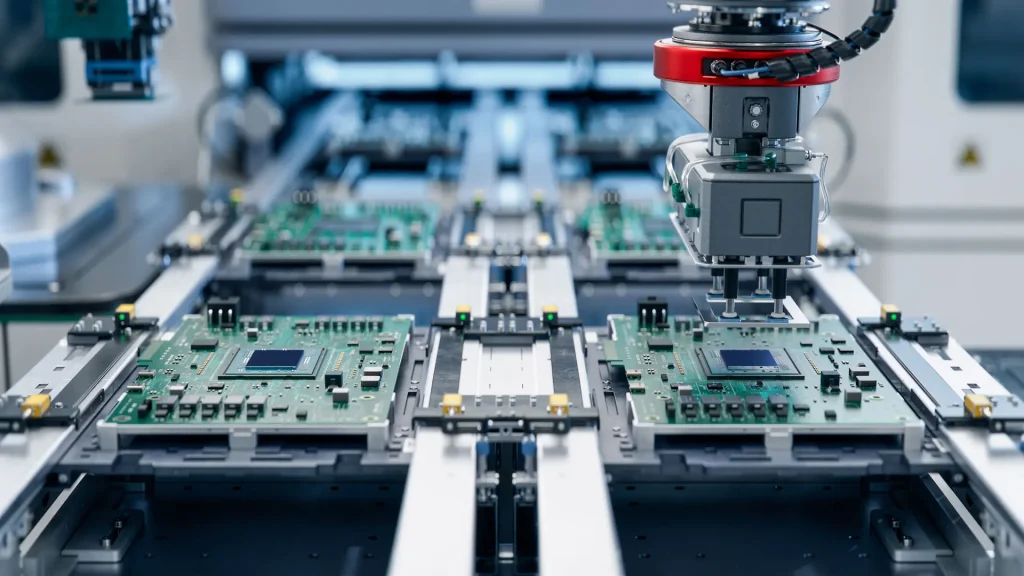
JinTeng  (SMT) assembly is a highly automated method of mounting electronic components directly onto the surface of printed circuit boards (PCBs), allowing for faster production speeds, higher component density, and improved electrical performance. Unlike traditional through-hole techniques, SMT eliminates the need for drilling, enabling more compact and lightweight product designs.

SMT is the foundation of modern electronics manufacturing, ideal for complex, high-speed, and high-reliability applications across aerospace, medical, defense, and industrial sectors. At Foxtronics EMS, we leverage Surface Mount Technology (SMT) to build robust, space-optimized printed circuit boards (PCBs) that meet the demands of mission-critical environments, all while maintaining tight tolerances and consistent quality.
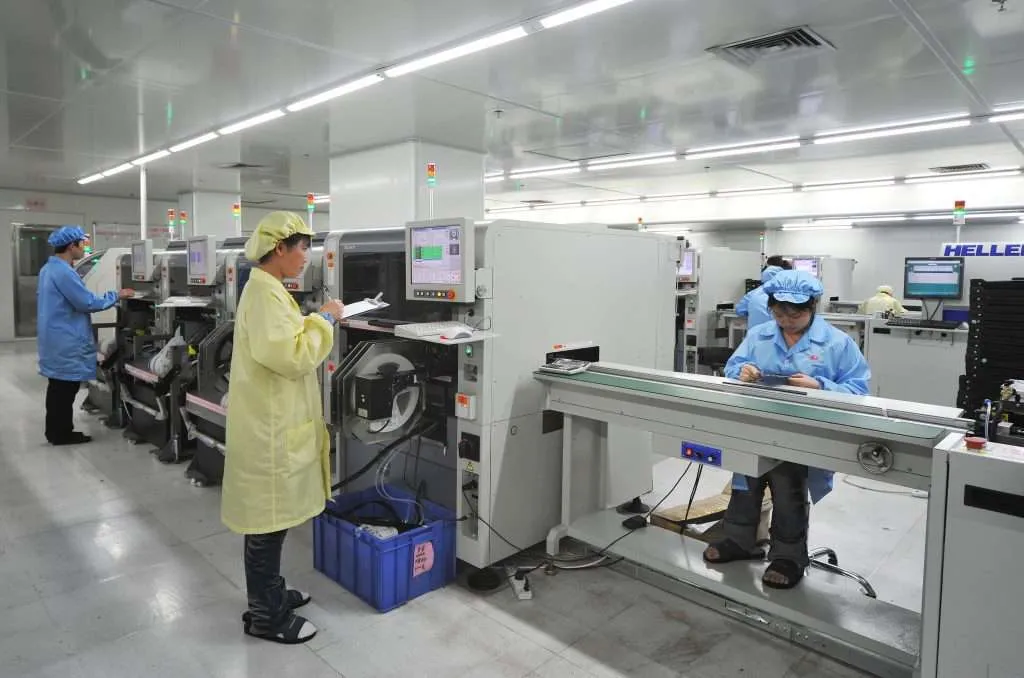
Production Capacity

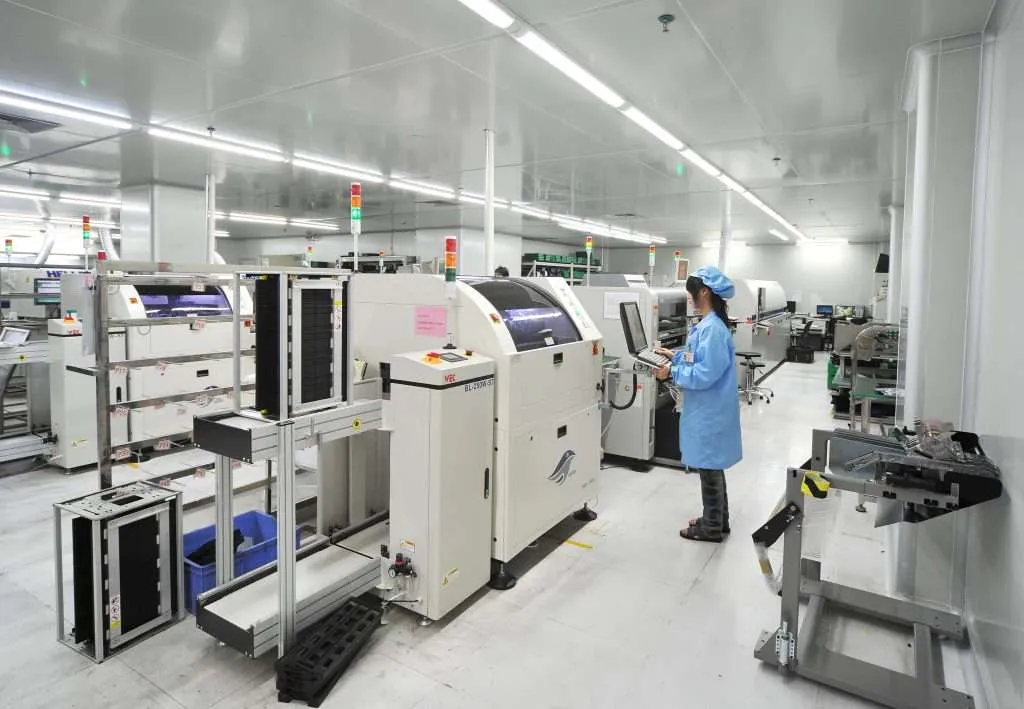
  • Capacity: Our integrated 7 automated production lines can achieve a monthly output of 52 million placements (0.15 seconds/chip, 0.7 seconds/QFP).
  • Specifications: Accepted board sizes range from 0.25″x0.25″ to 680×500 mm, with component sizes of 0201 – 54 square millimeters (0.084 square inches). We provide a variety of options, including long connectors, 0201 packages, CSP, BGA, QFP, and more.
  • Assembly: Single-sided, double-sided, rigid, flexible, rigid-flex combination.
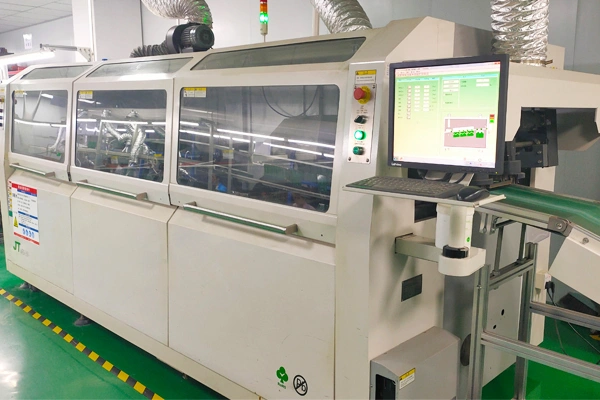
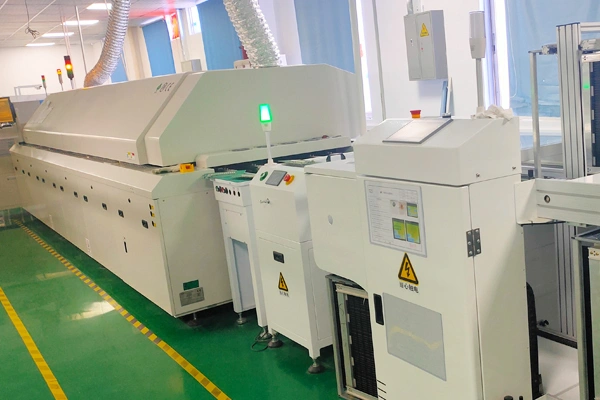
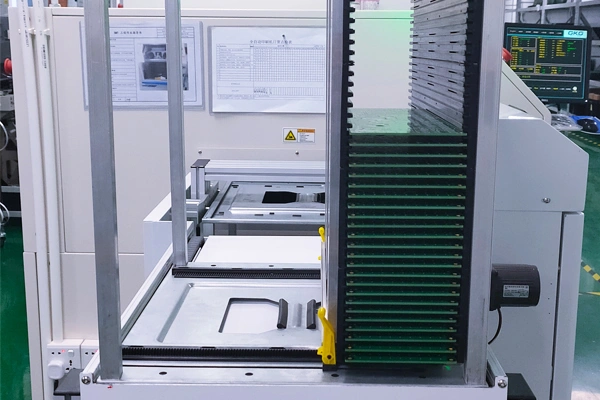
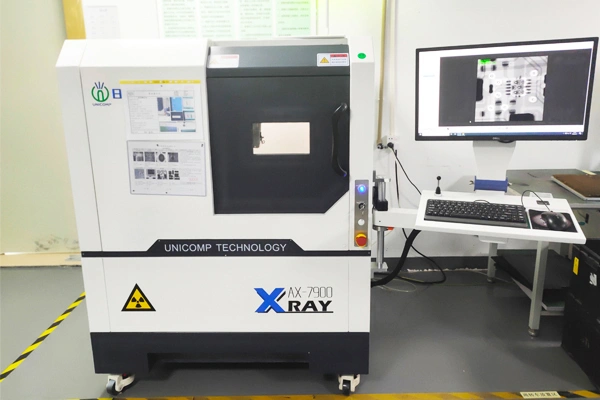
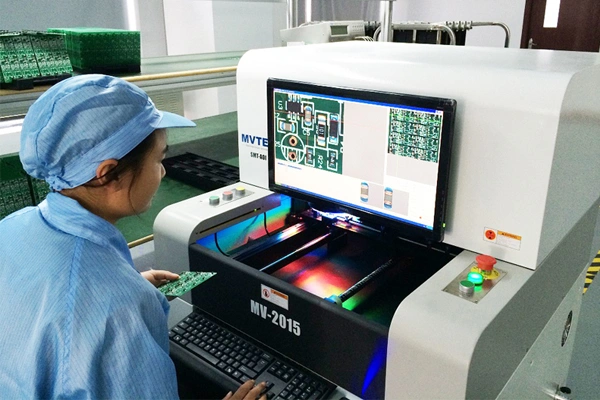
  • Equipment: Solder paste printer, SPI inspector, automatic solder paste printer, 10-zone reflow soldering, AOI, X-RAY, baking machine.
  • Certifications: ISO13485, ISO 9001, IATF16949, ISO 14001, ISO 45001.
  • Special Services: Design upgrades, component procurement, expedited projects, post-sales processing.
  • Industries: Medical, aviation, automotive, IoT, consumer electronics, and more.

Quality Assurance

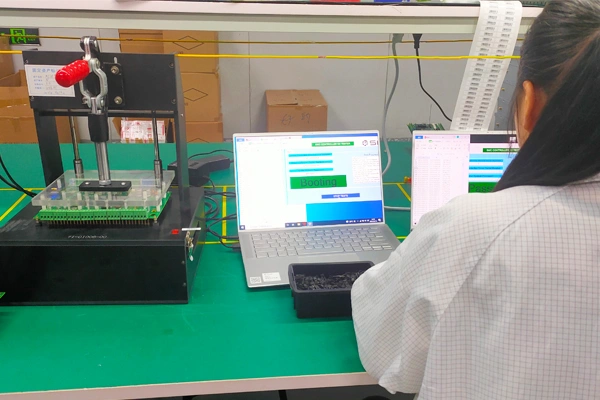
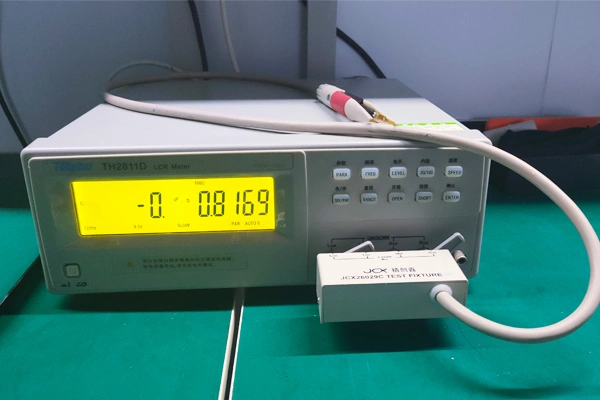
  • More than 15 of our personnel are involved in the quality control department, effectively controlling and managing essential processes like incoming material inspection, input quality control processes, outgoing quality control processes, etc.
  • Equipped with 5 electronic engineers who are constantly putting forward constructive improvement suggestions on DFM manufacturability and the engineering process, effectively improving product quality and overall production efficiency.
  • Electronic information display boards are implemented along the production line, ensuring functional supervision of the PMC production planning process and delivery times.
  • Electrostatic bags or electrostatic protective foam (PE foam) is used for safety in packaging and to ensure the safety of the product(s) during transportation.

SMT Equipment

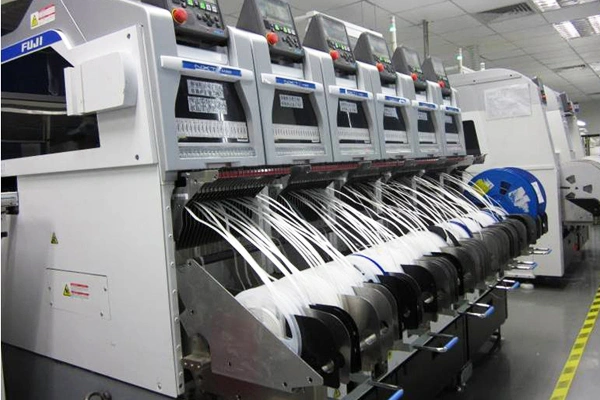
Juki JX-100 SMT Pick & Place Machine
Specifications 6 heads with laser alignment, 14,400 components per hour small chip 8mm or less Placement points per program 2,000
Applicable Component Sizes Height: min: 0.3mm max: 6mm
Size: min: 0.75 x 0.5mm max: 33.5mm sq
Lead Pitch: 15 mil
Applicable PCB Size min: X 50mm x Y 30mm
max: X 330mm x Y 250mm
thickness min: 0.4mm max: 4mm
 
Zevatech FS-750 SMT Pick & Place Machine
Specifications 3 heads with laser alignment, 8,000 components per hour small chip 8mm or less Placement points per program 2,000
Applicable Component Sizes Height: min: 0.3mm max: 6mm
Size: min: 1.0 x 0.5mm max: 23.5mm sq
Lead Pitch: 15 mil
Applicable PCB Size min: X 50mm x Y 30mm
max: X 330mm x Y 250mm
thickness min: 0.4mm max: 4mm
 
Zevatech PM-570 SMT Pick & Place Machine
Specifications Single head with laser alignment, 3870 components per hour max rating Placement points per program 2,000
Applicable Component Sizes Height: max 6mm
Size: min 1.0 x 0.5mm max: 33.5 sq
Lead Pitch: 15 mil
Applicable PCB Size min: X 30mm x Y 30mm
max: X 406mm x Y 330mm
thickness min: 0.6mm max: 2.5mm

Why Surface Mount PCB Assembly?

Currently, the proportion of SMT in electronic boards far exceeds that of THT, and one major reason is that SMT assembly is more conducive to automation. In contrast, THT may still require manual intervention, especially when dealing with large components. The benefits of machine production include tireless and error-avoidant work compared to the potential errors in manual assembly.

Secondly, the geometric dimensions and volume of SMD components are much smaller than DIP components, weighing only a tenth of DIP components. This advantage allows SMT PCBA to fit more tightly, enabling effective space utilization.

In terms of circuit performance, SMT technology directly solders components to the surface of the PCB without the need for leads to pass through holes, thereby reducing the distance between components and the PCB. This not only improves the performance of signal transmission, but also significantly reduces electrical and thermal noise in PCB.

Future of Surface Mount Technology

As of 2023, the market size of SMT assembly services has reached $6 billion and is expected to continue growing. By 2035, it is anticipated to surpass $15 billion, with a compound annual growth rate of 7%. This robust development trend is attributed to automation, miniaturization, and cost-effectiveness.

In the future, miniaturization will continue to reduce the spacing between component leads, possibly going below 0.010 inches. Faced with this change, SMT service providers should further optimize soldering techniques to prevent tiny solder pads from being threatened by heat.

Additionally, environmental issues are a significant concern. The RoHS directive explicitly states that the use of lead solder in assembly can be harmful to the environment. Manufacturers should adopt lead-free PCB assembly as an alternative to continue serving the electronics industry.
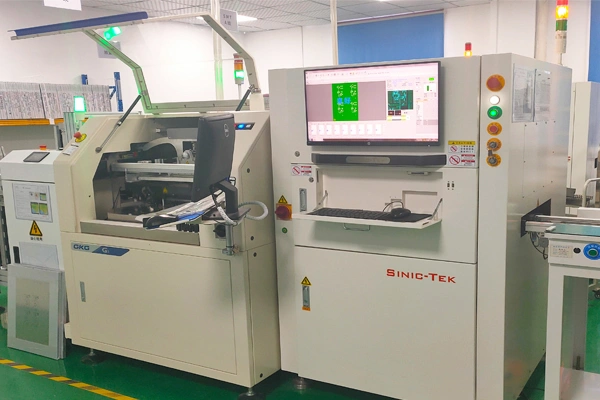
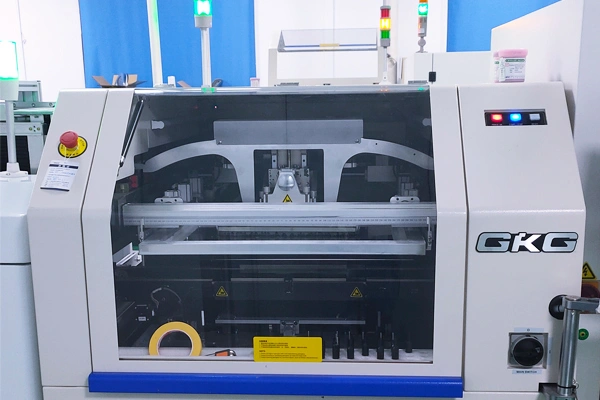
JinTeng's SMT PCB Assembly Process

  • Material Preparation Whether it is components or solder paste, our suppliers are all long-term stable quality partners. PCBbee's professional sourcing team will prepare PCB bare board, electronic components and stencil according to customer's requirements. We will keep in touch with the customers, without the customer's confirmation, we will not arbitrarily change any parts.
  • Solder Paste Printing The solder paste is a mixture of tiny beads of metal solder and tacky flux which are used to connect the components with the pads on PCB boards. We use automatic solder paste printer to improve production efficiency, reduce defect rate and cost. After this process, a layer of solder paste is laid on the pads of PCB board.
  • Solder Paste Inspection Many SMT assembly quality defects are related to the quality of solder paste printing. PCBbee's solder paste inspection adopts laser non-contact advanced automatic measurement method, high precision, fast speed, and little influence of human factors and environment. Monitoring the thickness and change trend of solder paste is the key to improve SMT assembled PCBA boards' production quality and reduce repair cost.
  • SMT Placement Then the PCB is put into the pick and place machine where we use Siemens high speed machines to place the components into the solder paste on pads. Minimum components 01005, maximum 56mm*56mm. Support Maximum PCB size 510mm*460mm. The placement speed is up to 79000cph.
  • Reflow Soldering After pick & place machines, the PCBs are put into the reflow soldering oven where the solder paste will melt and solidify and the electronic components will be firmly fixed on the pads of PCB boards. PCBbee's reflow soldering ovens have 10 temperature zones and we always design and apply different temperature profiles for different PCBA projects.
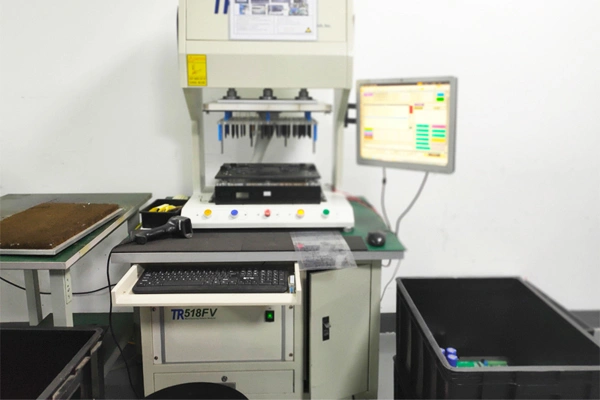
  • First Article Inspection We have experienced staff to do the first article inspection, to check whether it is fully consistent with the customer's data requirements, whether the components are installed correctly and so on. The first inspection inspection is an effective measure to find problems as soon as possible and prevent the PCBA products from being scrapped in batches. Through the first article inspection, it can be found that if there are some systematic reasons, such as installation positioning errors, wrong reading of drawings. For PCBA batch production, first article usually means prototype boards.
  • Automated Optical Inspection (AOI) After reflow soldering, PCB boards will be tested by AOI machine. It can effectively detect the polarity errors, leaks, deviations, reverses, damage, empty welding and so on. It is fast and precise and can ensure the quality control of SMT production. PCBA boards that fail the test will be sent back for repair until they are qualified.
  • X-Ray Testing The AOI machine can not test circuit boards with BGA, CSP, LGA components, then we need to use X-Ray testing to monitor the SMT assembly production process. It can timely correct the position of components on the board, and prevent the occurrence of welding problems(open circuit, short circuit, leak welding, etc).

* Advantages of JinTeng's SMT Assembly Service

What we factory

Electronic Manufacturing Factory

Item 1
Item 2
Item 3
Item 4
Item 5
Item 6
Item 1
Item 2
Item 3
Item 4
Item 5
Item 6