Medical PCBs are one of the core elements of the development of modern medical devices, involving design, manufacturing and assembly processes to support the reliable operation of diagnostic, treatment and monitoring equipment. As medical technology advances, the demand for high-quality PCBA manufacturers grows. Therefore, it is particularly important to choose the right qualified manufacturer.
This article will give you a comprehensive understanding of the medical PCBA, including its definition, design and manufacturing process, and how to choose a quality manufacturer that meets ISO 13485 certification.
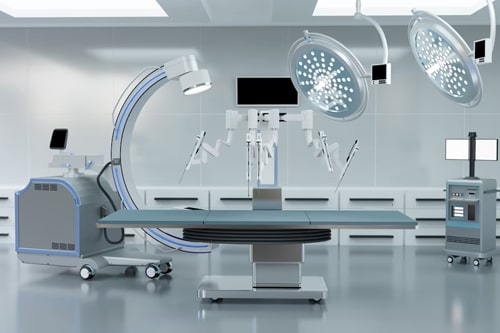
Medical PCB and medical PCBA are two different component stages in a medical device. A medical PCB refers to the bare circuit board for medical equipment, which has not assembled any electronic components, and only provides circuit wiring, mechanical support and electrical connections for the later medical PCBA. They usually use high-temperature and corrosion-resistant substrates to meet the demanding requirements of medical equipment.
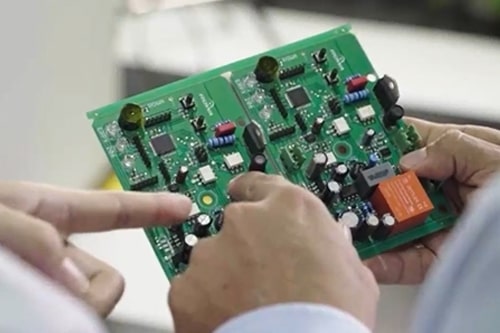
As mentioned above, medical PCBA refers to a complete assembly of various electronic components formed by soldering on the basis of medical PCB, which is a functional circuit board and forms a circuit system that can perform specific functions. The medical PCBA has a rigorous assembly and testing process that requires medical device certification such as ISO 13485 to ensure quality and safety.
Although the two terms are often confused, the difference is that PCBA is a complete functional circuit, while PCB is only the basic building block.
Medical PCBA has a wide range of applications in the medical field, covering multiple scenarios such as diagnosis, treatment, monitoring and medical cosmetic, and promoting the accuracy, safety and reliability of various medical devices.
Diagnostic equipment: Medical diagnostic equipment such as MRI and CT scanners need to process a large amount of data, and complex medical electronics assembly plays a large role in this.
Monitoring equipment: In medical monitoring equipment, such as heart rate monitors and blood glucose monitors, medical PCBA collects data through specific functions, transmits and processes it. The precise design of the medical PCB can ensure the stable and continuous operation of the monitoring equipment.
Therapeutic devices: Medical PCBA is essential in devices such as pacemakers, infusion pumps, and ventilators to ensure patient safety while providing high reliability. For example, as a pacemaker is an implantable device, the PCB design needs to meet the miniaturization, low power consumption and extremely high reliability, so its electronic assembly is also extremely important.
Medical cosmetic equipment: Non-invasive cosmetic equipment, such as laser skin treatment equipment, also relies on precise and consistent PCB assembly to ensure safe operation.
The design and assembly of circuit boards is a complex process, the requirements for circuit boards used in medical devices are even more stringent. When designing a medical PCB, designers need to focus on the complexity and precision of the board, as well as the choice of components.
3.1 Complexity and Precision
Medical equipment is related to life, its functionality is more complex, requiring high precision performance to ensure the reliability and accuracy of data monitoring and output. Medical PCBs are typically multi-layer structures to support high-density component layouts as well as complex wiring.
At the same time, in the design process of the medical circuit board, it is also necessary to optimize the line layout, width, spacing, etc., to reduce magnetic interference and improve the accuracy of the circuit board.
In addition, many medical devices need to operate for a long time and may generate a lot of heat. Therefore, in the medical circuit board design process, it is crucial to include effective heat dissipation methods.
3.2 Component Selection
The selection of components for the medical PCBA is critical and must meet medical standards for durability and performance. At the same time, the choice of appropriate components is the key to the performance, service life and safety of medical equipment. When selecting the right component, its power efficiency, material, stability and reliability should be considered to adapt to the challenges of different medical environment.
In addition, components must comply with specific medical and regulatory standards, such as the ISO 13485 medical device standard, to ensure the safety and functionality of the device.
The medical PCB assembly process is a highly regulated process that must strictly adhere to quality and safety standards to meet the needs of medical applications.
4.1 Main Steps to Assemble a Medical PCB
1. PCB manufacturing and preparation:
Manufacture bare board PCBs according to design specifications, including etching, copper plating, drilling, and addition of solder masks. This stage ensures that the layout of the board meets the requirements of the circuit diagram and that the structure is robust.
2. Solder paste:
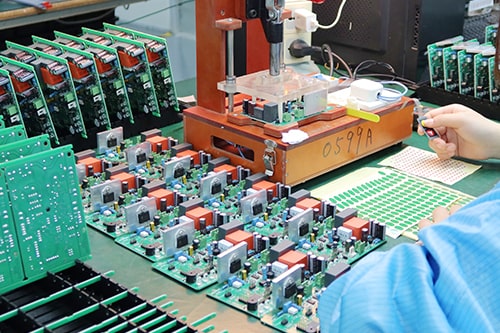
Apply solder paste to specific areas of the board using a template to facilitate subsequent welding of surface mount components (SMDs). The application of solder paste must be accurate to avoid problems with bridging or insufficient solder paste, which can lead to poor connections.
3. Component mounting:
Use an automatic mounter to place surface mount components (SMDs) onto the PCB. The machine can precisely position each component. In some cases, precision or sensitive components are manually mounted to ensure accuracy and prevent damage.
4. Reflow soldering:
After the component is mounted, the PCB is heated by a reflow furnace to melt and solidify the solder paste to form a strong connection. The temperature curve is precisely controlled to avoid thermal damage to the sensitive element.
5. Through hole components soldering:
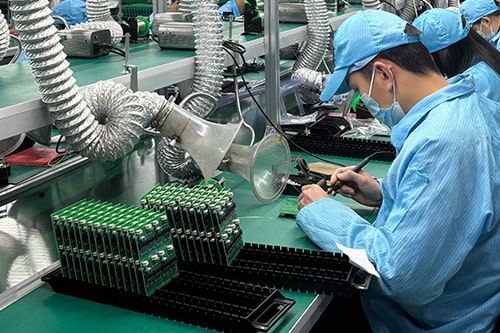
For components that require stronger mechanical connections, such as connectors or large capacitors, use through-hole technology. Components are inserted into pre-drilled holes and fixed to the circuit board by wave soldering or hand soldering.
6. Clean:
After soldering, clean the assembled circuit board to remove flux residue and other contaminants and ensure that no conductive residue remains on the board. In medical PCBA manufacturing, the cleaning step is critical to meet sterilization and cleanliness standards.
7. Protective coating or potting (if necessary):
The circuit board may be coated with a protective coating to shield it from moisture, dust, and other contaminants. Potting (encapsulation of the circuit board in a protective resin) is used in some critical applications to ensure durability and reliability, especially in harsh medical environments.
8. Final assembly and marking:
Integrate the PCBA with other mechanical components of the device and mark compliance, including bar codes or serial numbers, for easy traceability to comply with regulatory requirements for medical devices.
4.2 Two Common Assembly Techniques
Two technologies are mainly used in the PCB assembly process: surface mount technology and through hole technology.
Surface mount technology (SMT), in which components are attached directly to the PCB surface, is ideal for high-density and compact, lightweight device assembly, which is critical for compact medical devices.
Through hole technology (THT), in which the pins of the components are passed through the PCB assembly hole and soldered on the other side, providing a strong mechanical connection suitable for larger components.
4.3 Quality Control and Testing
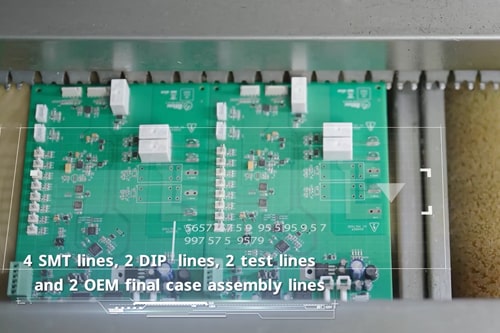
Quality control is a key part in the medical PCB assembly process. Medical PCBAs undergo rigorous testing to ensure they meet high reliability and safety standards. Testing typically includes thermal cycling, stress testing, and functional testing to ensure that each PCBA meets regulatory standards and can withstand the harsh conditions of use in a medical environment. These rigorous procedures ensure that the final product is safe and reliable for medical applications.